Flying with high blood pressure? Learn how air travel affects BP, risks, precautions and tips to stay safe while travelling with hypertension.
Air Travel and Blood Pressure: Is Flying Safe for High BP Patients?
Travelling by air often brings a mix of excitement and concerns, and for individuals living with hypertension and one common question arises: is air travel safe? The relationship between air travel and blood pressure is widely discussed, yet it is frequently misunderstood. Flying involves altitude changes, long hours of sitting, and the occasional turbulence-induced anxiety spike.
Understanding how the body responds to flying and knowing when extra caution is needed can help you travel confidently and comfortably.
Is It Safe to Travel by Air with High Blood Pressure?
For most people with well-controlled hypertension, flying is considered safe. Commercial aircraft are pressurised. Cabin pressure is typically maintained at levels comparable to being 6,000 to 8,000 feet above sea level. This change is mild and usually well tolerated.
In cases of stable readings and regular medication use, doctors generally do not restrict flying. So when discussing air travel high blood pressure, the key factor is control, not simply the diagnosis.
If your numbers are steady and you feel well, boarding a flight is rarely a problem.
How Air Travel Affects Blood Pressure?
Now let’s talk science. But in simple terms.
When you fly, cabin air pressure drops slightly. Oxygen levels are a bit lower than at ground level. Your body responds by working a little harder to circulate oxygen.
For most people this leads to minor, temporary changes in blood pressure. Nothing dramatic.
But here’s what actually causes issues:
- Airport stress
- Running to the gate like it’s a marathon
- Dehydration
- Too much salty airplane food
- Anxiety during turbulence
So when people talk about air travel and high blood pressure, it is often the stress circus, not the aircraft itself.
Risks of Flying with High Blood Pressure
But if BP is severely high, things change. Extremely elevated readings can increase the risk of:
- Stroke
- Heart attack
- Chest pain
- Worsening heart failure
Also, long flights increase the risk of blood clots in the legs, especially if you sit still for hours. This risk exists for everyone, but uncontrolled BP can add to cardiovascular strain.
Some people notice high blood pressure after air travel. Often this is temporary. It may be due to exhaustion, poor sleep, jet lag, salty food, or simply travel stress.
In most cases, readings return to baseline once normal routines resume.
Who Should Avoid Flying with High BP?
Most people do not need to cancel trips.
But flying may need postponement if you have:
- Uncontrolled hypertension with very high readings
- Recent heart attack or stroke
- Severe chest pain
- Recent major heart surgery
- Symptoms like severe breathlessness or dizziness
If your systolic BP is persistently above 180 mmHg or diastolic above 110 mmHg, speak to your doctor before booking that window seat.
In these circumstances, ensuring cardiovascular stability is more important than adhering to travel schedules.
Tips for Safe Air Travel with High Blood Pressure
With appropriate preparation, high blood pressure and airplane travel can be managed safely and comfortably. A few practical steps can significantly reduce the risk of complications.
- Monitor your blood pressure in the days leading up to travel. This provides reassurance and allows time to address any concerns.
- Take medications exactly as prescribed and plan carefully for time zone differences if travelling internationally.
- Stay well hydrated throughout the flight, as cabin air is dry and dehydration can affect circulation.
- Move regularly during long journeys. Standing, stretching, and walking periodically help maintain healthy blood flow.
- Limit salty foods and alcohol, both of which may contribute to temporary increases in blood pressure.
- Adopt simple stress-management strategies, such as controlled breathing or listening to calming music, to keep anxiety levels in check.
These measures are straightforward but effective in maintaining stable readings during travel.
Can You Carry Blood Pressure Medication and Devices on a Flight?
Yes, absolutely.
You can carry BP medication in your cabin bag. In fact, you should. Never pack essential medicines in checked luggage.
Keep them in original packaging. Carry a prescription if possible, especially for international travel.
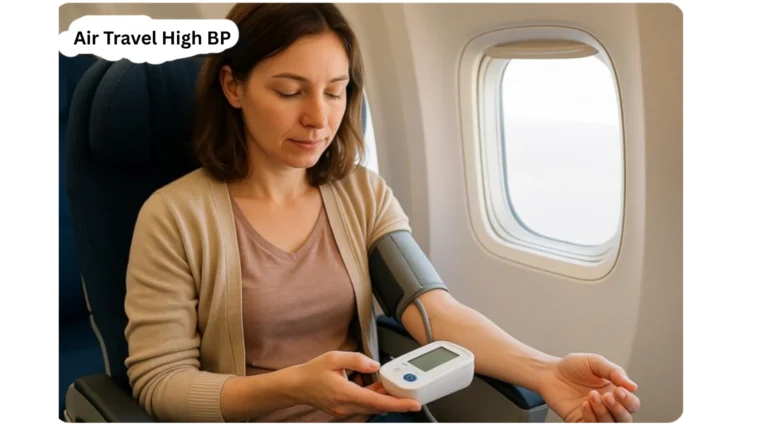
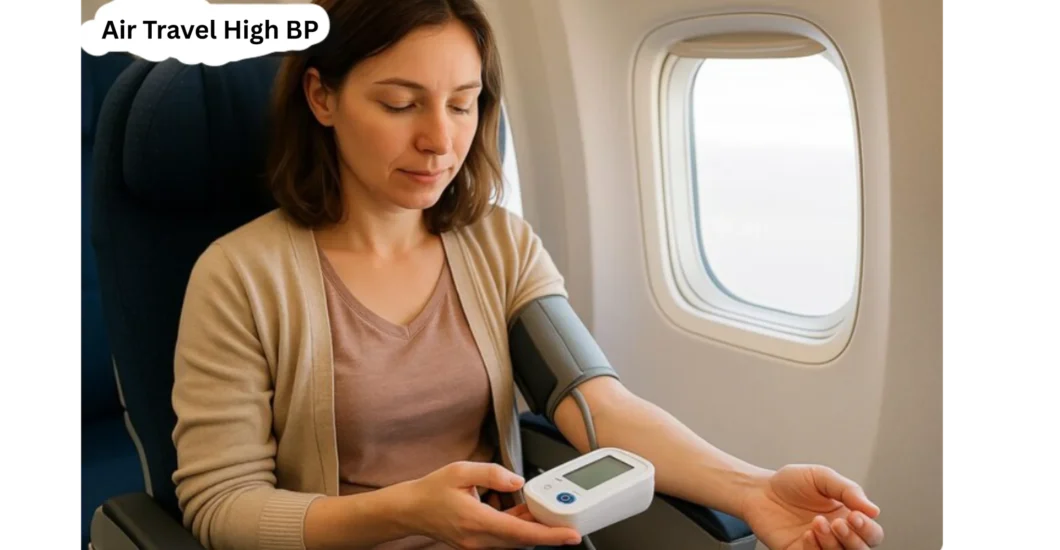
Portable digital BP monitors are also allowed in cabin baggage. If checking your numbers mid-flight gives you peace of mind, go for it. Just avoid obsessive checking every 20 minutes.
Being prepared ensures continuity of care throughout the journey.
When to Seek Medical Help During Air Travel
While serious medical events during flights are uncommon, it is important to recognise warning signs. Immediate assistance should be sought if you experience severe chest pain, sudden weakness on one side of the body, difficulty speaking, significant shortness of breath, or loss of consciousness.
Cabin crew are trained to respond to medical emergencies, and aircraft are equipped with basic medical kits. If necessary, pilots can arrange priority landing for urgent medical care.
Quick reporting of symptoms can prevent any complications.
Conclusion
Air travel and blood pressure are generally compatible when hypertension is well controlled. The mild physiological changes associated with flying are usually tolerated without difficulty. More often than not, factors such as dehydration, stress, and disrupted routines have a greater influence on blood pressure than the flight itself.
By planning ahead, adhering to medication schedules, and adopting simple preventive measures, individuals with hypertension can travel safely and confidently.
Frequently Asked Questions (FAQs)
Can high blood pressure patients travel by flight?
Yes, most individuals with controlled hypertension can travel by air safely, provided they have no recent serious cardiac events.
Does air travel increase blood pressure?
Air travel may cause mild and temporary changes, but stress, dehydration, and lifestyle factors during travel often play a larger role.
What precautions should BP patients take before flying?
They should monitor their blood pressure beforehand, take medications consistently, stay hydrated, and limit salt and alcohol intake.
Can I carry a BP monitor on a plane?
Yes, digital blood pressure monitors are permitted in cabin luggage.
Is flying risky for hypertension patients?
For those with well-managed blood pressure, the risk is low. Individuals with severely uncontrolled hypertension should seek medical advice before travelling.
Disclaimer
The information contained in this article is to educate, spread awareness in relation to hypertension and other diseases to the public at large. The contents of this article are created and developed by BPinControl.in through its authors, which has necessary, authorisations, license, approvals, permits etc to allow usage of this articles on The Website. The views and opinions expressed in this article are views, opinions of the respective authors and are independently endorsed by doctors. Although great care has been taken in compiling and checking the information in this article, The Website shall not be responsible, or in any way liable for any errors, omissions or inaccuracies in this article whether arising from negligence or otherwise, or for any consequences arising therefrom. The content of this article is not a substitute for any medical advice. The Website shall not be held responsible or liable for any consequence arising out of reliance on the information provided in the article.